Blog
The office beyond the walls: working en plein air
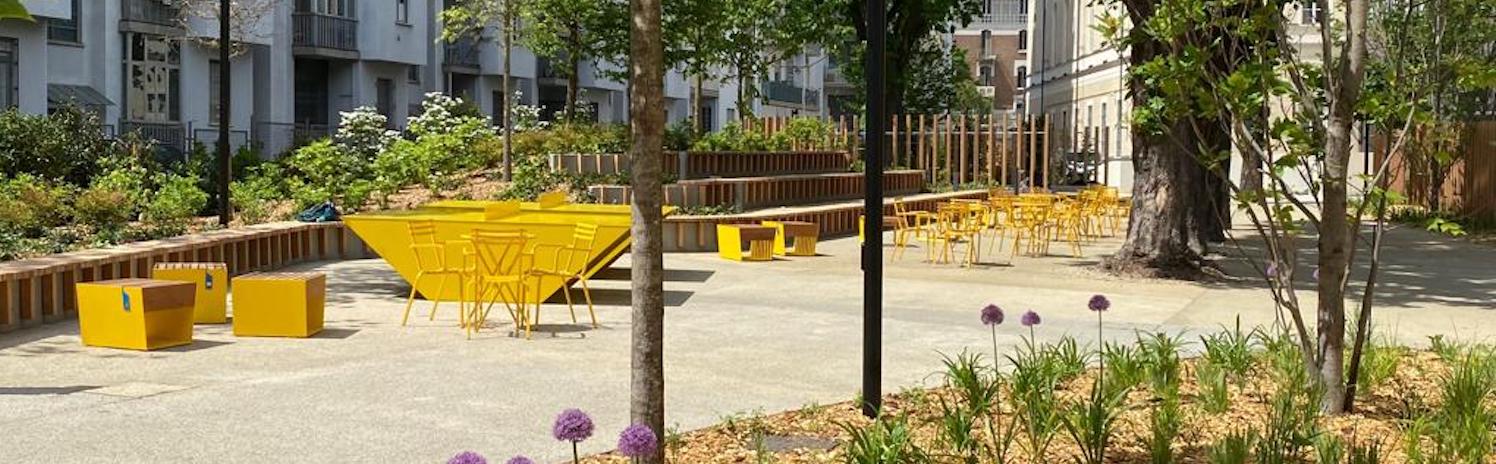
In recent years, the concept of workspace has undergone a profound transformation. It is not just about smart working and home offices: corporate offices are also evolving to offer more dynamic and flexible environments. Offices are expanding outward, incorporating terraces, courtyards and gardens as part of the work experience.
Contact with nature is, thus, not just an aesthetic detail, but a key element in well-being and productivity. Studies from the University of Michigan show that working outdoors reduces stress, improves concentration and increases the quality of work. It is not surprising, then, that more and more companies are adopting outdoor solutions for their offices.
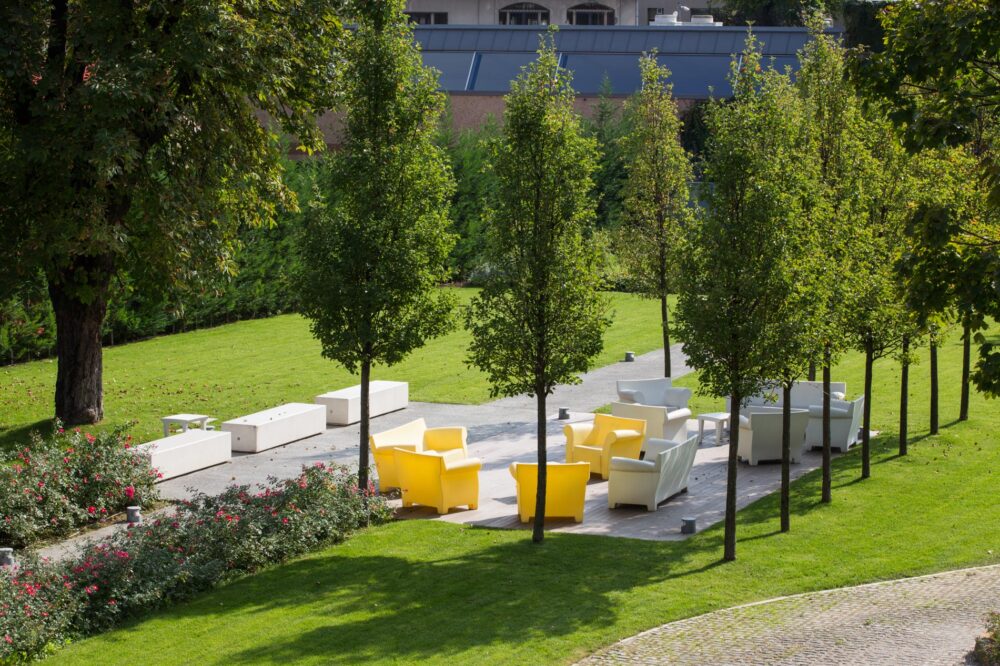
In recent years, the concept of workspace has undergone a profound transformation. It is not just about smart working and home offices: corporate offices are also evolving to offer more dynamic and flexible environments. Offices are expanding outward, incorporating terraces, courtyards and gardens as part of the work experience.
Contact with nature is, thus, not just an aesthetic detail, but a key element in well-being and productivity. Studies from the University of Michigan show that working outdoors reduces stress, improves concentration and increases the quality of work. It is not surprising, then, that more and more companies are adopting outdoor solutions for their offices.
New operational areas: the value of hybrid spaces
Hybrid workspaces are redefining the very concept of the office. Terraces and gardens are no longer just relaxation areas, but operational environments equipped to host meetings, coworking sessions and brainstorming. Working outdoors stimulates creativity and concentration, offering a greater variety of scenarios than traditional environments.
For this reason, too, more and more companies are investing in creating outdoor spaces equipped with ergonomic workstations, Wi-Fi connection and comfortable furniture. Choosing to alternate indoor and outdoor environments also makes work more dynamic and improves the quality of time spent in the office, while also fostering collaboration among colleagues.

New operational areas: the value of hybrid spaces
Hybrid workspaces are redefining the very concept of the office. Terraces and gardens are no longer just relaxation areas, but operational environments equipped to host meetings, coworking sessions and brainstorming. Working outdoors stimulates creativity and concentration, offering a greater variety of scenarios than traditional environments.
For this reason, too, more and more companies are investing in creating outdoor spaces equipped with ergonomic workstations, Wi-Fi connection and comfortable furniture. Choosing to alternate indoor and outdoor environments also makes work more dynamic and improves the quality of time spent in the office, while also fostering collaboration among colleagues.
Outdoor workspace: the new frontier of offices
The idea of working outdoors is catching on in more and more corporate settings, with some international headquarters developing veritable campuses surrounded by greenery while other, smaller companies are rethinking their spaces to integrate them in small but functional ways.
Corporate terraces, for example, can become operational environments designed to take advantage of natural light and provide a stimulating atmosphere; courtyards can be transformed into places to meet and collaborate thanks to pergolas, plant walls and green furnishings; and corporate gardens can take on a multifunctional role, perfect for alternating work and rejuvenating breaks.

Outdoor workspace: the new frontier of offices
The idea of working outdoors is catching on in more and more corporate settings, with some international headquarters developing veritable campuses surrounded by greenery while other, smaller companies are rethinking their spaces to integrate them in small but functional ways.
Corporate terraces, for example, can become operational environments designed to take advantage of natural light and provide a stimulating atmosphere; courtyards can be transformed into places to meet and collaborate thanks to pergolas, plant walls and green furnishings; and corporate gardens can take on a multifunctional role, perfect for alternating work and rejuvenating breaks.
Designing sustainable offices surrounded by greenery
Integrating greenery into workplaces is not just an aesthetic choice, then, but a real strategy for improving quality of life and reducing environmental impact. Different solutions, such as plant walls, green roofs and natural screens, optimize the microclimate, reduce noise pollution and improve the energy efficiency of buildings.
A transformation, this one, that goes beyond architecture: it represents a paradigm shift in the way we perceive and experience work. The offices of the future will increasingly be hybrid spaces, capable of adapting to the needs of people and the planet. Investing in nature-connected workplaces means improving productivity, employee satisfaction, and corporate positioning toward a more sustainable approach.
Designing sustainable offices surrounded by greenery
Integrating greenery into workplaces is not just an aesthetic choice, then, but a real strategy for improving quality of life and reducing environmental impact. Different solutions, such as plant walls, green roofs and natural screens, optimize the microclimate, reduce noise pollution and improve the energy efficiency of buildings.
A transformation, this one, that goes beyond architecture: it represents a paradigm shift in the way we perceive and experience work. The offices of the future will increasingly be hybrid spaces, capable of adapting to the needs of people and the planet. Investing in nature-connected workplaces means improving productivity, employee satisfaction, and corporate positioning toward a more sustainable approach.