Blog
Architecture and nature: the key role of vegetation in LEED and WELL certified projects
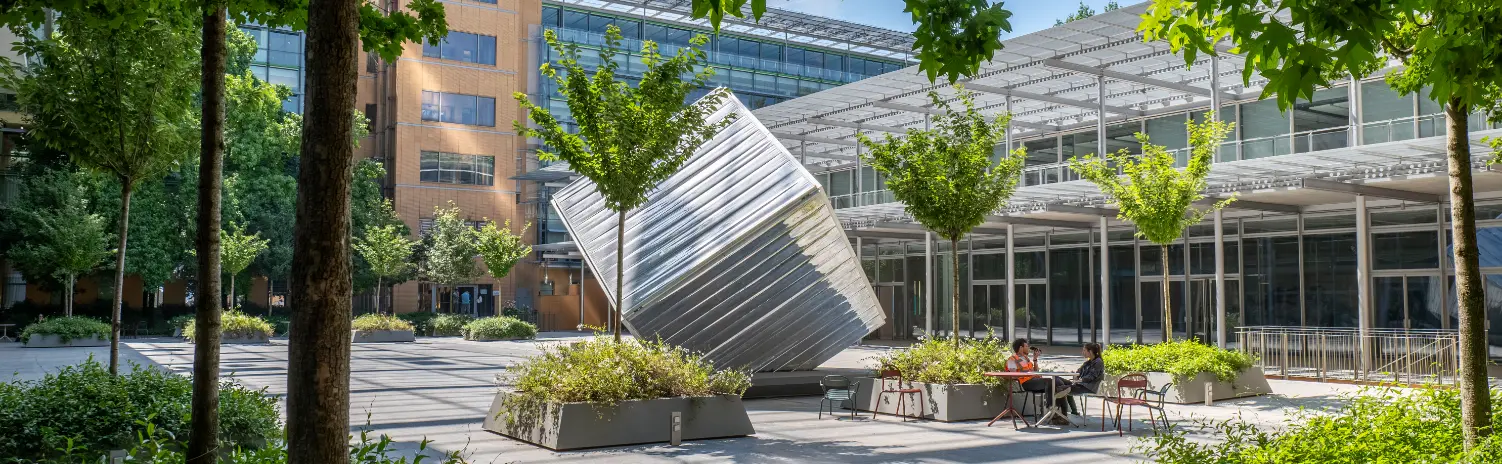
In an increasingly dense and technological urban context, sustainable architecture is emerging as one of the most concrete responses to address environmental challenges and improve quality of life. It is in this scenario that vegetation plays a central role not only as an aesthetic element, but as a key component for the sustainability of buildings and the well-being of their inhabitants. Green certification systems, such as LEED (Leadership in Energy and Environmental Design) and WELL (provided by the International WELL Building Institute, IWBI), promote a design approach geared toward sustainability and well-being, while also recognizing the importance of integrating nature into built spaces.
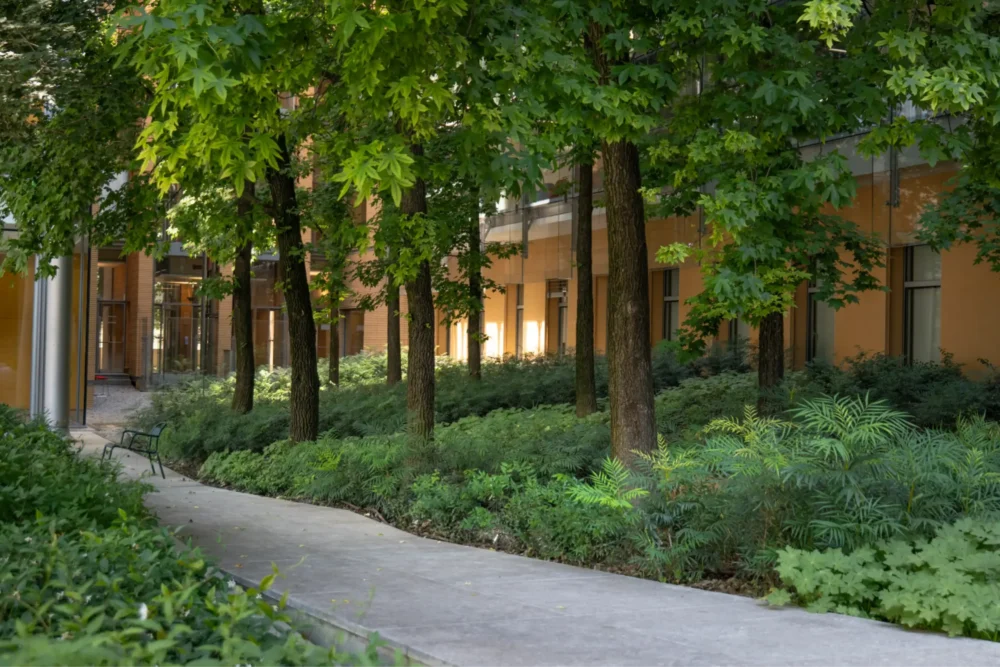
In an increasingly dense and technological urban context, sustainable architecture is emerging as one of the most concrete responses to address environmental challenges and improve quality of life. It is in this scenario that vegetation plays a central role not only as an aesthetic element, but as a key component for the sustainability of buildings and the well-being of their inhabitants. Green certification systems, such as LEED (Leadership in Energy and Environmental Design) and WELL (provided by the International WELL Building Institute, IWBI), promote a design approach geared toward sustainability and well-being, while also recognizing the importance of integrating nature into built spaces.
The importance of vegetation for the environment and human well-being
Through photosynthesis and transpiration, the integration of vegetation into built spaces offers numerous benefits such as purifying the air, reducing the heat island effect and improving thermal comfort. According to a study published in the Journal of Building Engineering, the presence of plants in buildings reduces the need for heating and cooling, improving energy efficiency and contributing to the sustainability of structures. In addition, the use of green technology, such as roof gardens and green walls, helps to strengthen urban biodiversity and bring, even in areas where space is limited, green solutions that promote a healthier and more livable environment.

The importance of vegetation for the environment and human well-being
Through photosynthesis and transpiration, the integration of vegetation into built spaces offers numerous benefits such as purifying the air, reducing the heat island effect and improving thermal comfort. According to a study published in the Journal of Building Engineering, the presence of plants in buildings reduces the need for heating and cooling, improving energy efficiency and contributing to the sustainability of structures. In addition, the use of green technology, such as roof gardens and green walls, helps to strengthen urban biodiversity and bring, even in areas where space is limited, green solutions that promote a healthier and more livable environment.
LEED certification: a commitment to environmental sustainability
LEED certification, which evaluates the environmental performance of buildings, considers several aspects including efficient use of resources, water management, indoor environmental quality and innovation. Among the various criteria, the integration of vegetation plays a key role: vertical gardens, green walls, rooftops, and other urban planting solutions not only improve the thermal and acoustic insulation of buildings, but also contribute to stormwater management and the reduction of ambient temperatures.

LEED certification: a commitment to environmental sustainability
LEED certification, which evaluates the environmental performance of buildings, considers several aspects including efficient use of resources, water management, indoor environmental quality and innovation. Among the various criteria, the integration of vegetation plays a key role: vertical gardens, green walls, rooftops, and other urban planting solutions not only improve the thermal and acoustic insulation of buildings, but also contribute to stormwater management and the reduction of ambient temperatures.
WELL certification: occupant well-being at the center
WELL certification, on the other hand, focuses primarily on occupant well-being and health by evaluating a number of parameters, such as air quality, lighting, thermal comfort and sound. This recognition places particular importance on the presence of natural elements in interior spaces, from a biophilic perspective: in fact, vegetation not only contributes to improved air quality, but also has positive effects on the mental and physical health of those living in the buildings analyzed. In a study conducted by Human Spaces (2015), the integration of natural elements into work spaces was found to improve productivity by 15 percent, demonstrating the importance of a natural environment for occupant well-being.
WELL certification: occupant well-being at the center
WELL certification, on the other hand, focuses primarily on occupant well-being and health by evaluating a number of parameters, such as air quality, lighting, thermal comfort and sound. This recognition places particular importance on the presence of natural elements in interior spaces, from a biophilic perspective: in fact, vegetation not only contributes to improved air quality, but also has positive effects on the mental and physical health of those living in the buildings analyzed. In a study conducted by Human Spaces (2015), the integration of natural elements into work spaces was found to improve productivity by 15 percent, demonstrating the importance of a natural environment for occupant well-being.
Conclusions
Integrating vegetation into buildings is an effective response to environmental challenges, contributing to the creation of healthier spaces geared toward occupant well-being. Solutions such as vertical gardens, green walls and rooftops offer effective answers to improving comfort, air quality and energy efficiency, even in the most complex urban settings. LEED and WELL certifications chart a clear path to enhance these interventions, emphasizing the importance of nature as an active component of architectural design. A forward-looking approach in which sustainability and well-being become guiding principles for the transformation of built spaces.
Conclusions
Integrating vegetation into buildings is an effective response to environmental challenges, contributing to the creation of healthier spaces geared toward occupant well-being. Solutions such as vertical gardens, green walls and rooftops offer effective answers to improving comfort, air quality and energy efficiency, even in the most complex urban settings. LEED and WELL certifications chart a clear path to enhance these interventions, emphasizing the importance of nature as an active component of architectural design. A forward-looking approach in which sustainability and well-being become guiding principles for the transformation of built spaces.
Related Articles

Reconnecting with nature in a virtual world: the new challenge of biophilic design
Can virtual reality help us feel closer to nature?...